For many prospective parents, planning for the birth and early months of their baby’s life is a time filled with nervous excitement as you anticipate where to give birth and imagine welcoming a new member into the family. However, what happens when this doesn’t go to plan? In the next few paragraphs we’ll hear the story of Rachel and Thomas, whose home birth plans were put in jeopardy after their little girl, Lily, was diagnosed with a life-limiting condition called Hypoplastic Left Heart Syndrome. This is a story of how doctors, community teams and consultants from hospital and hospice collaborated and dedicated their plans and efforts to support a family’s wishes in time of heartbreak. This is a story of how a family was given what they needed to experience autonomy, beauty and peace, even in the midst of their greatest grief. And how that made a difference for them – even in the years following the loss of their daughter.
Here, Lily’s mum Rachel tells the family’s story in her own words
“At our 20-week anomaly scan for our third baby, I lay on the bed, watching along while the sonographer looked at our baby’s measurements and organs to see how the pregnancy was progressing. “Looks like a girl!”, she announced. I squeezed my husband’s hand in excitement. Because they hadn’t been able to get a clear view of baby’s heart, we were booked in for a follow up cardiology scan. It was there that we received the devastating diagnosis that our daughter’s heart had not formed all the way due to a severe congenital heart defect called “Hypoplastic Left Heart Syndrome (HLHS)”. We left the hospital that day feeling deep grief and uncertainty at what this would mean for our daughter and family. That afternoon we named her Lily, knowing that no matter how brief or fragile her life, our willingness to see her beauty, and love her completely would transform us.
Along with the diagnosis, we were offered three options:
- Terminate the pregnancy
- High risk, palliative surgery upon birth
- Continuation of pregnancy without life-prolonging interventions
We chose the latter of the three options and began the painful process of reimagining what Lily’s life – and now certain death – would be like. Despite the unknowns, I knew that I still wanted to give birth at home, like I had done with my previous babies. I longed for “normal” memories at home with Lily and for her to have a life with us before she died. Unfortunately, with my pregnancy being “high risk” and Lily’s care being complex after she was born, this was looking very unlikely. It was one more loss for me to grieve.
I decided to mention my desires to my midwife, Amanda Crudgingdon, and to Dr. Dominic Wilkinson, our neonatal palliative care doctor. They introduced us to Helen & Douglas House, a hospice for children. The medical director, Dr. Emily, was initially surprised at my request for a home birth. But after speaking to my care team and other neonatal and palliative care colleagues from other Trusts, the question of “why not?” spurred her forward towards setting the plans in motion to make birth at a home a possibility.
Dr. Emily wrote, “It feels critically important to support patient choice and delivery of personalised care. There are times in palliative care, where conventional protocols and risk assessments need to be viewed in a different ethical contact, offering a risk aware, not risk adverse approach.” I am so grateful that Dr. Emily was open to considering not only the complex physical needs but emotional needs as well that were present as I anticipated birthing Lily.
From here, we began meeting with the neonatal and palliative care consultants at Helen & Douglas House to begin piecing together Advance Care and Symptom Management plans. This plan covered everything from medications we would administer to Lily to keep her comfortable as she died, to spiritual needs and other personal wishes and preferences. Lily’s condition required extensive planning to ensure that she arrived safely and that her care could be managed at home.
From doctors like Dr. Emily at the hospice, to neonatologists and community nurses and midwives — everyone came together to ensure Lily’s life was made as comfortable as possible. A peer review of Lily’s case was sought out at a national professional forum for perinatal palliative care. An anticipatory symptom management plan was written up to ensure that medicines would be available prior to Lily’s brith. This was one of the practical challenges the team faced. Preparation and prescription of medication was not possible prior to birth as a unique medical record number was unable to be assigned. But after several meetings with multi-disciplinary teams, plans were put into place to facilitate birth at home.

In the aftermath of a life-changing diagnosis, it is easy to feel out of control – like the Earth is no longer solid ground beneath your feet. Something as simple as choosing where to give birth is actually incredibly profound. It helped me feel empowered and autonomous during a time of deep uncertainty.
While we waited for Lily to be born, Helen & Douglas House gave us the gift of holistic support. It was not until after the birth and death of Lily that I realised how much sacrifice and effort went into helping me give birth to Lily safely at home. But they didn’t just support us medically, they supported us emotionally as well. Our son and daughter benefited from their wonderful play therapy team and they spent hours building memories in a space that will forever be a physical reminder of their sister Lily’s short, precious life.
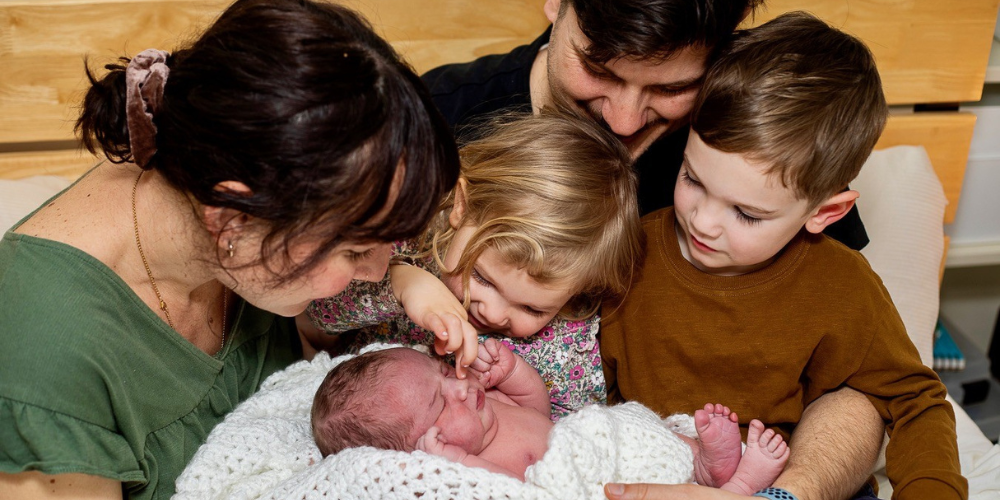
A few months later, Lily was born safely at home, surrounded by family and the support of my community midwife. When I look back at this time, I see how free I was to soak up every inch of Lily’s life. In my memories, I am surrounded by family, Lily on my chest. She breastfed eagerly. We took her on a walk in the fresh air with her brother and sister. Loved ones came to meet her. We took her foot prints. We spent those 5 impossibly beautiful days loving her completely before she died in my arms.
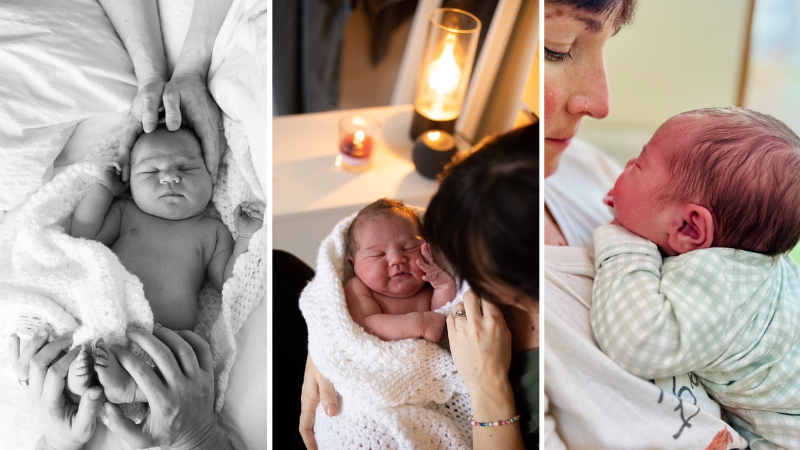
In the midst of all this “normality”, there were regular visits and support from community nurses, members of Helen & Douglas House, and neonatologist teams. Lily was assessed daily by our consultant paediatrician and neonatal and palliative care teams. On day 3 of life, when her breathing began to deteriorate, we were shown how and when to give her medicine to keep her comfortable. Our care team was always a phone call or a visit away when we felt any uncertainty or worry. They journeyed with us through the impossibly painful task of supporting our baby as she died. Helen & Douglas House helped facilitate so many of these crucial details of Lily’s care so that we could simply be with and treasure her with the time we had.
After Lily died, we carried her in a bassinette to the Little Room at Helen & Douglas House. Lily’s body rested there for 2 days and our family was shown such kindness during this time. The play team attended to our children and grief support workers made themselves available to my parents and mother-in-law who were with us. I’ll also never forget members of the team coming in to check on me and bringing me hot tea, bottles to express milk into and cosy blankets to curl up with while I sat and wept over Lily’s body.
It is hard to communicate what a gift Helen & Douglas House was to us during this time. In the midst of immense grief, they not only celebrated Lily’s life with us, but they supported us practically and emotionally. Lily’s life was characterised by peace and love in large part because of Helen & Douglas’s willingness to facilitate such a peaceful and loving environment for our family to abide in. I am grateful to have the memories of birthing Lily in our home. I am grateful to have held her warm body against mine, on the same sofa where I held my other babies postpartum. I feel privileged to have moments of beauty with her before she died. I will forever treasure the fullness of being with Lily through life and death.”
Fuelling further research; changing perceptions
Lily’s story is proof that home birth is possible within a palliative care context. Birth choices are incredibly personal to every family, and having access to the right support can prove transformational in how a family comes away from the birth of their child. Rachel and Thomas longed for Lily’s birth to be characterised by “peace and love” and home felt like the best place for them. Their desires were possible thanks to the collaboration, dedication and forward planning of specialist teams, like Helen & Douglas House. Rachel expressed that this “encouraged me to not fear the uncertainty around Lily’s life and death.”
Lily’s story has since gone on to improve the support available for many other families. Her story has been told at many paediatric palliative care talks across the country to fellow parents and healthcare professionals alike, has been published in a Palliative Medicine journal, and is serving to try and change the perceptions of paediatric palliative care. Rachel and Thomas’ positive reflections on Lily’s birth show that a palliative diagnosis, when approached sensitively and planned for adequately, can not only transform a family’s experience, but empower them to make the choices that are right for them and ultimately produce a better outcome. More research is needed to further understand individualised preferences socially and culturally, but Lily’s story has opened a door that was once shut completely. Thanks to Rachel and Thomas sharing their story, more conversations are now being had which will hopefully lead to a much wider understanding of the needs of families like Lily’s.
The future of perinatal palliative care
Lily’s case is part of increasing evidence that shows that having access to perinatal palliative care and support throughout pregnancy, birth, and the neonatal period for families of babies with life-limiting conditions is incredibly beneficial not just for families, but for healthcare professionals too. There is an opportunity for healthcare professionals to better understand the complexities that come with paediatric palliative care.
Her family’s case could also facilitate and open the door to more research into palliative care and home birth options and can also help bring awareness around choices antenatally and in birth. Michaela is an advanced clinical practitioner in perinatal palliative care working at Helen & Douglas House. Her role is helping to expand the reach of paediatric palliative care and support for parents in similar situations as Rachel and Thomas. Michaela said, “I love the challenges associated with setting up a new and worthwhile service and the knowledge that we can provide excellent care for our families. The aim is to increase the number of antenatal and neonatal referrals to the service, ultimately allowing support and interventions earlier in their journeys. I would also like to develop a monthly mother and baby group so families can network and provide peer support.”
Lily’s parents’ positive attitude to their journey with Lily shows that a life-limiting antenatal diagnosis can be an opportunity for love, connection, and as Rachel herself has said – beauty.

Photos by Katie Amanda (Katie Amanda.com)