
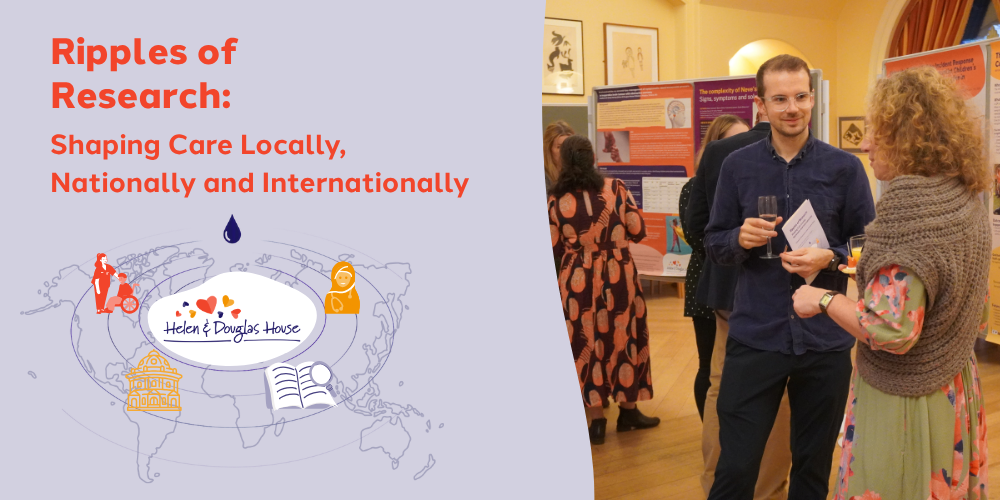
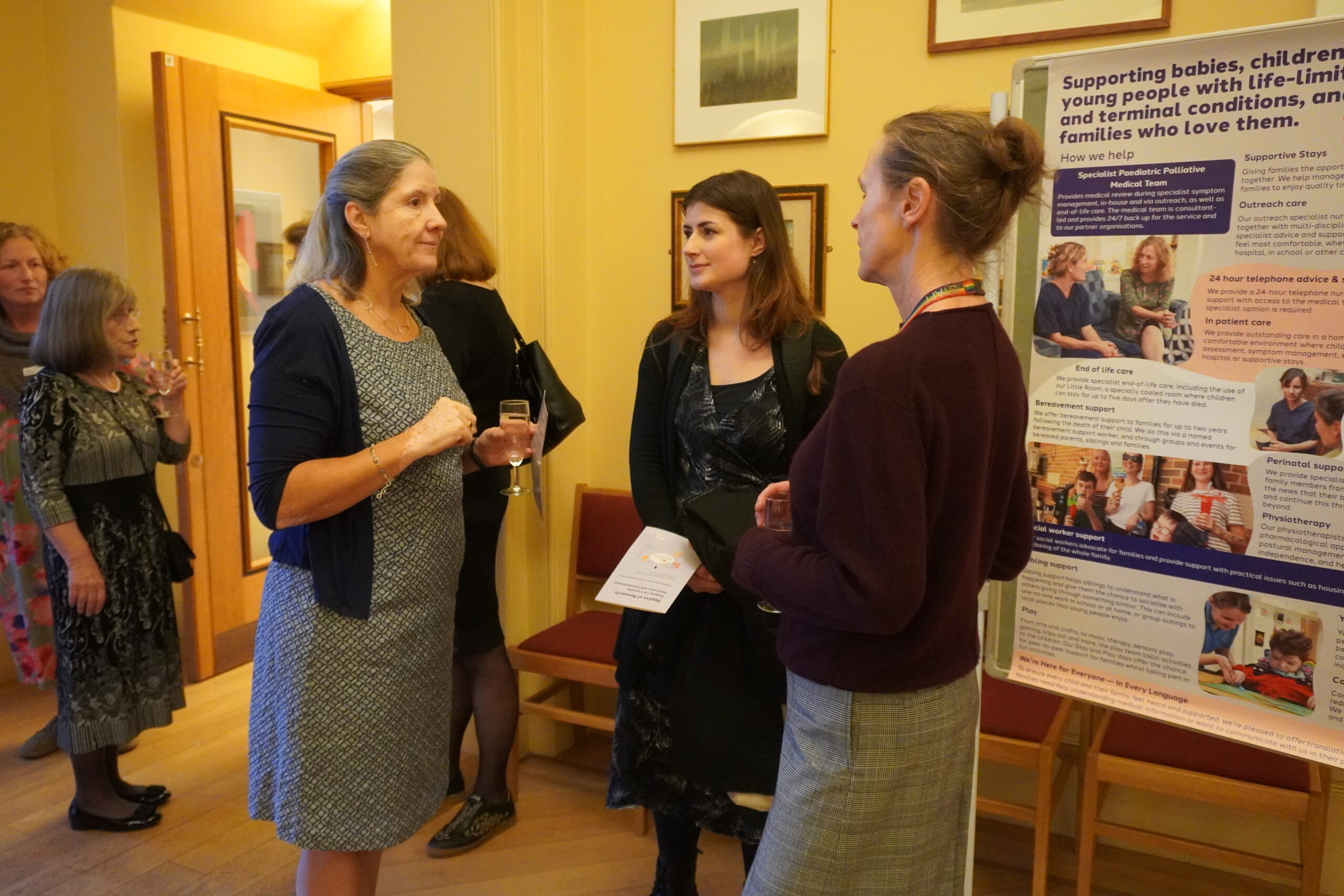
At Helen & Douglas House, research isn't something that happens in isolation. It begins with questions, conversations, lived experiences and shared curiosity. Often, it starts with a family, a clinician or a researcher asking, "Could we do this better?"
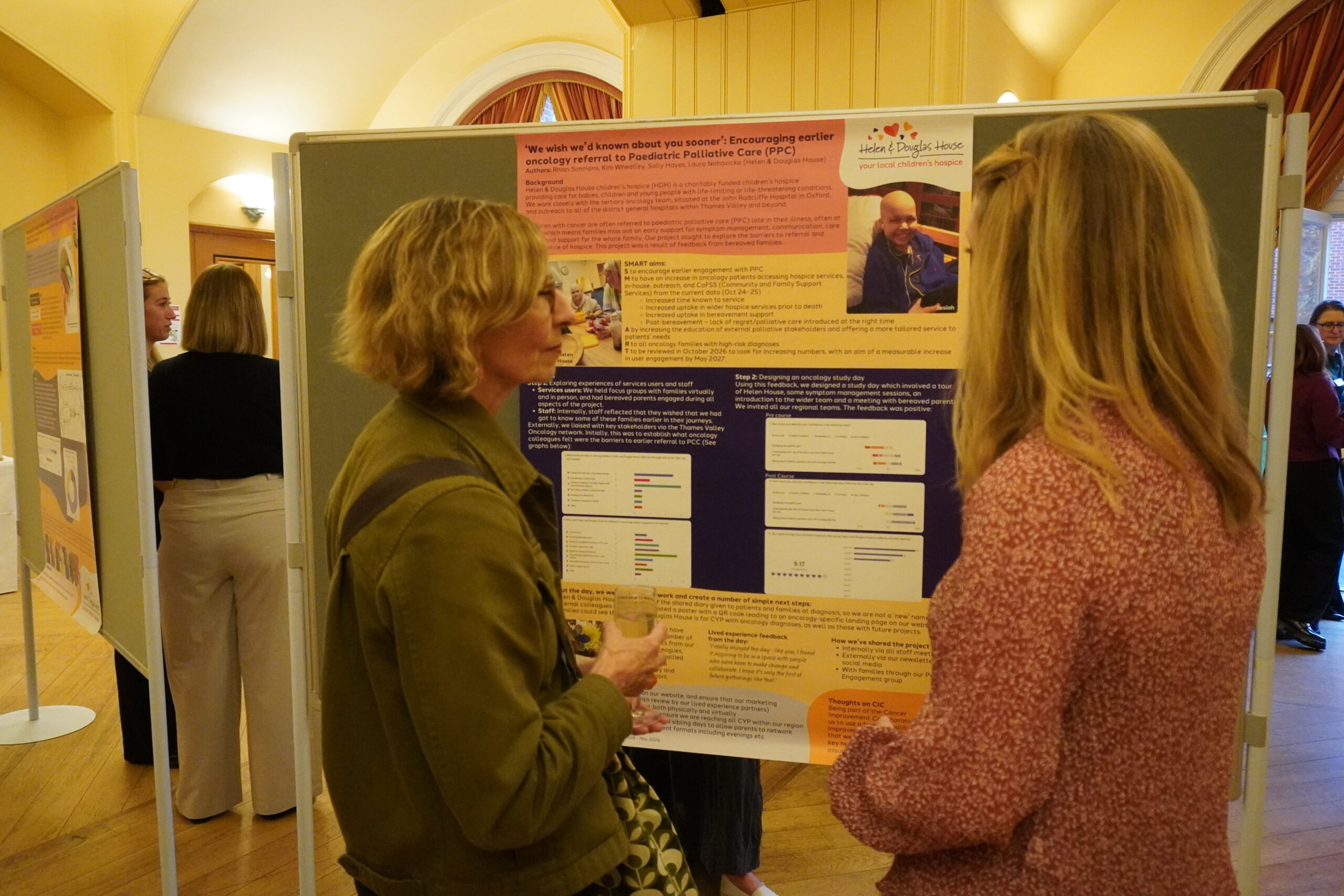
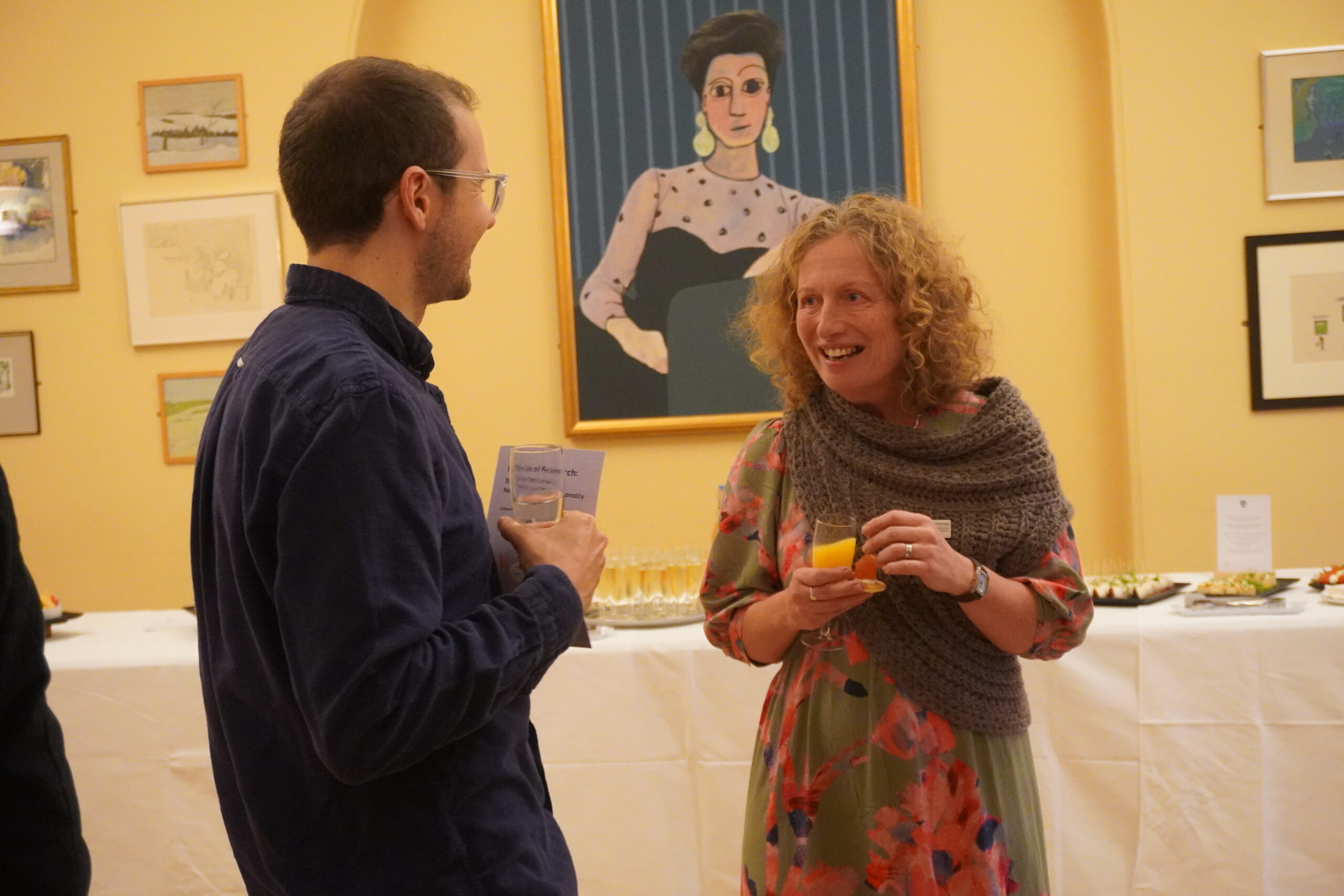
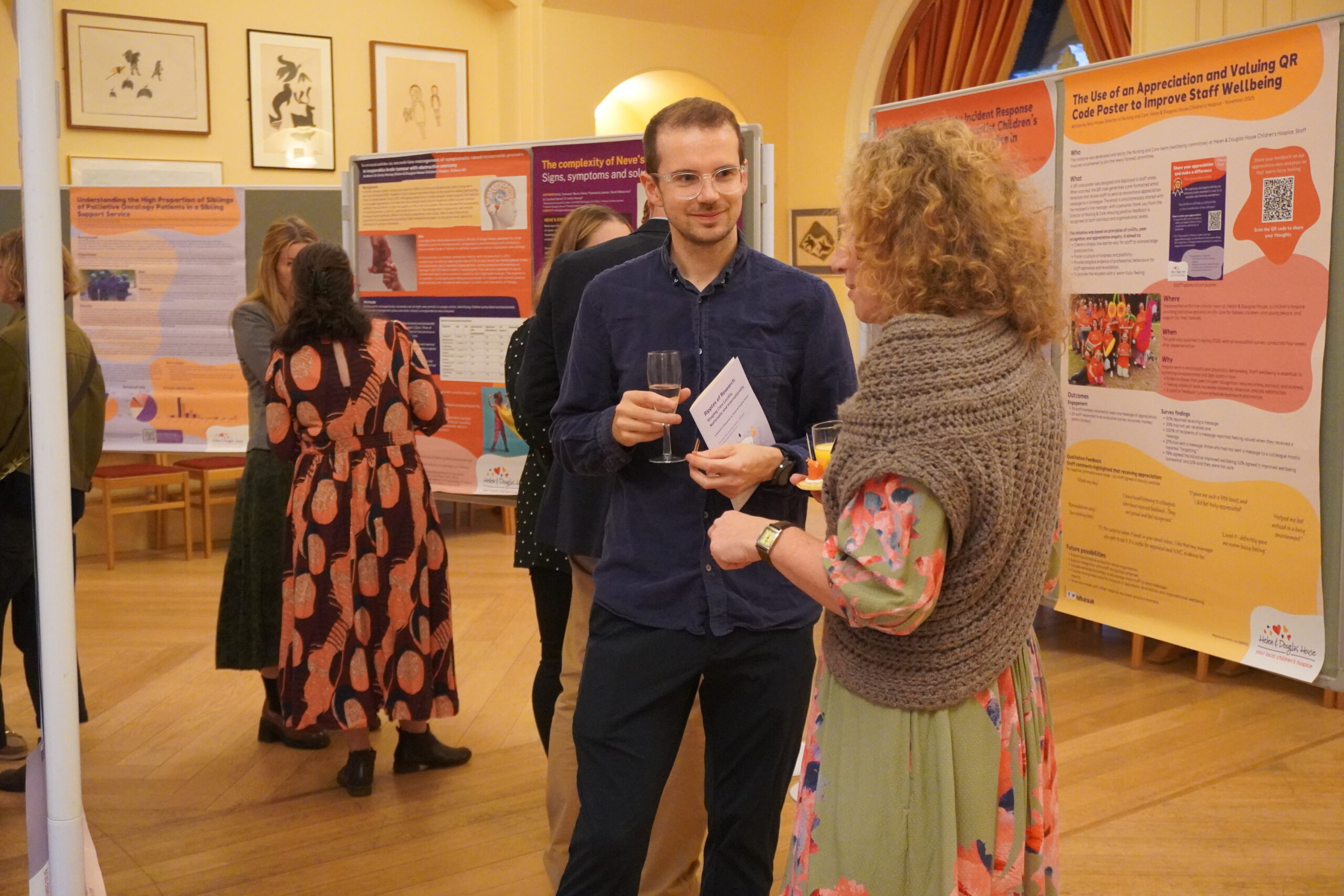
This year's research symposium, Ripples of Research, celebrated the many ways those questions grow into meaningful change, not only for the children and families we support, but for children's palliative care nationally and internationally.
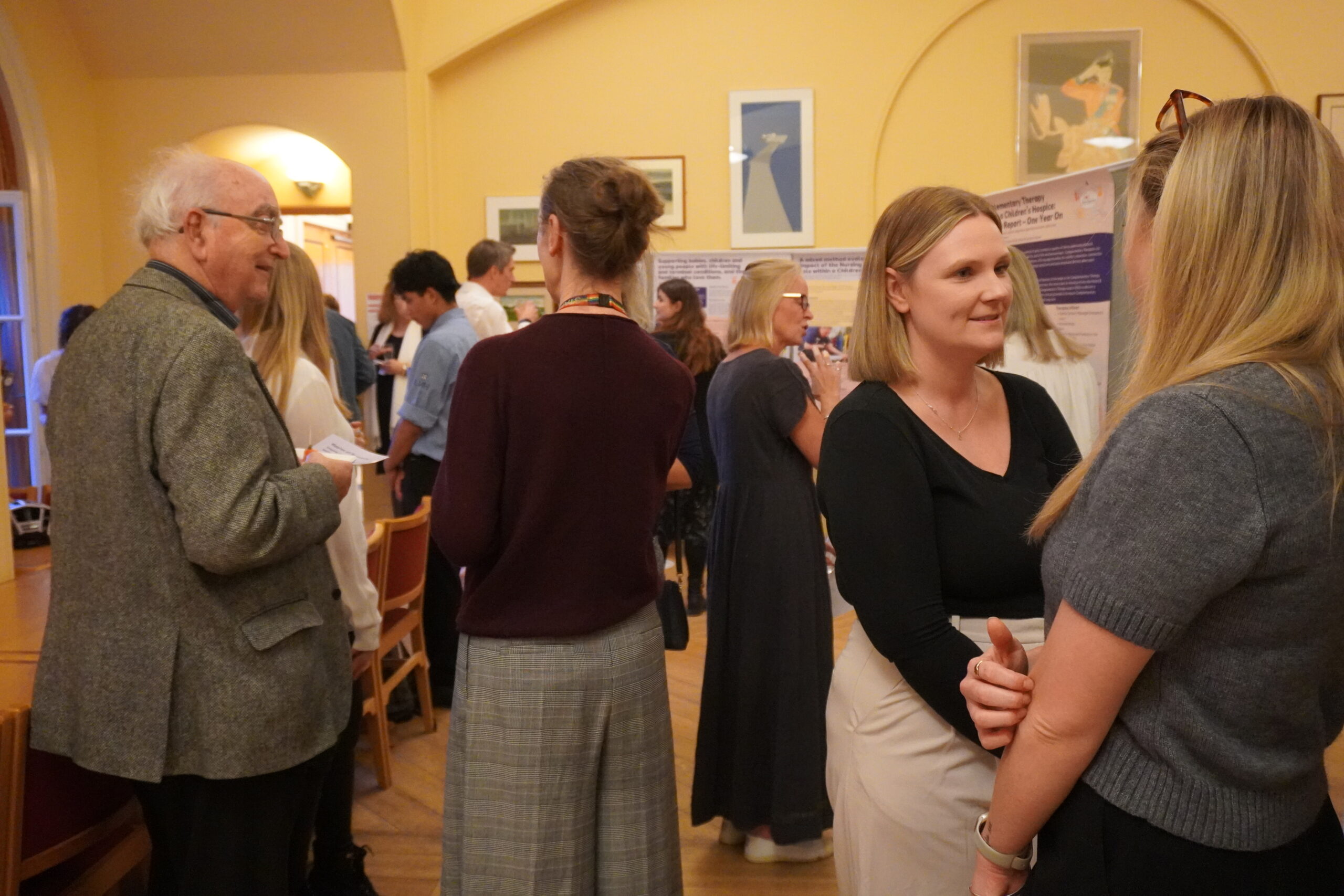
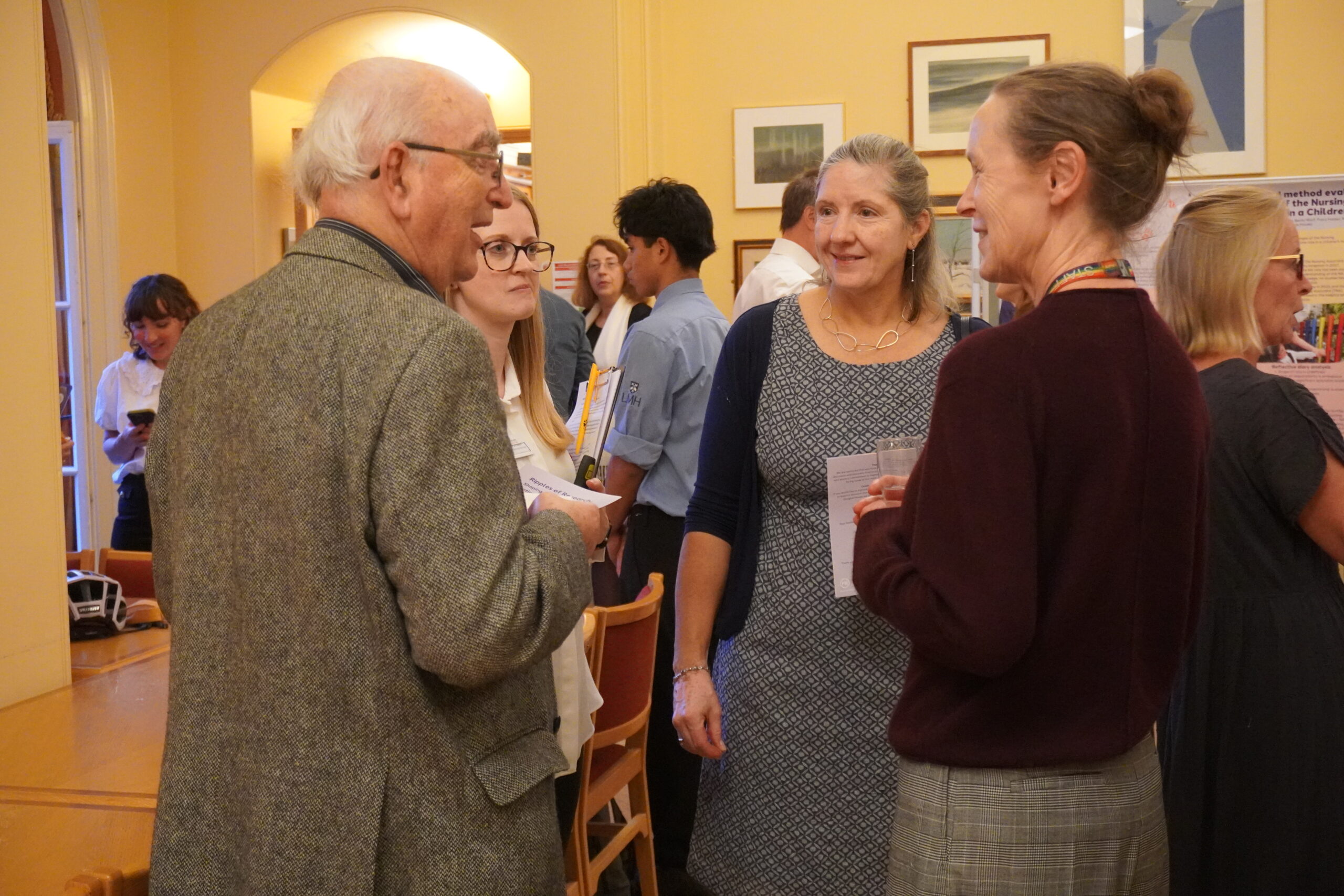
Bringing together clinicians, researchers, parents, academics and partners from across the sector, the evening explored how collaboration drives innovation and how even the smallest observations can create lasting impact.
The power of 'Little R' and 'Big R' research
One of the most memorable themes of the symposium was the distinction between "little r" research and "big R" Research. As speakers explained, while large-scale studies and academic research are vital, meaningful improvements often begin with something much simpler: noticing a pattern, listening to a family's experience, or asking a question about how care could be improved.
Throughout the evening, speakers speaker reinforced the idea that research belongs to everyone. Whether it's evaluating practice, gathering feedback, sharing lived experience or leading international studies, every contribution plays a part in advancing care for children and families.
As David concluded in the closing remarks, research succeeds through partnership, and small actions can create large ripples.
Families at the heart of Research
A particularly powerful aspect of the evening was hearing from parents whose experiences have directly influenced research and practice.
Emily Tammam, a bereaved parent and research contributor, shared her journey of becoming involved in research while caring for her daughter, Neve. What began as participation in pain research studies became a way of creating positive impact and legacy following Neve's death.
Her message was clear: parents bring insights that professionals may otherwise miss. Research becomes more meaningful, more relevant, and ultimately more impactful when shaped by the voices and experiences of families themselves.
Guests also heard from Rachel, who reflected on the birth and death of her daughter, Lily, and how lessons learned from her family's experience have gone on to help others. Her story was a moving reminder that behind every research project are real children, real families and real experiences.
From lived experience to published research
The importance of partnership between families and professionals was brought into sharp focus with the publication today of a new paper in Palliative Medicine, one of the world's leading journals in palliative care.
"Bringing humanity to data: The scientist, the parent and the doctor", co-authored by Dr Emily Harrop, Emily Tammam and Sylvia Stoianova, explores the value of bringing together clinical expertise, research knowledge and lived experience.
The paper exemplifies the very principles at the heart of Ripples of Research, demonstrating how parents and professionals can work as equal partners to strengthen research and improve care. It is also a powerful example of how the experiences of families can help shape the future of children's palliative care far beyond their own journey.
Making an impact locally, nationally and globally
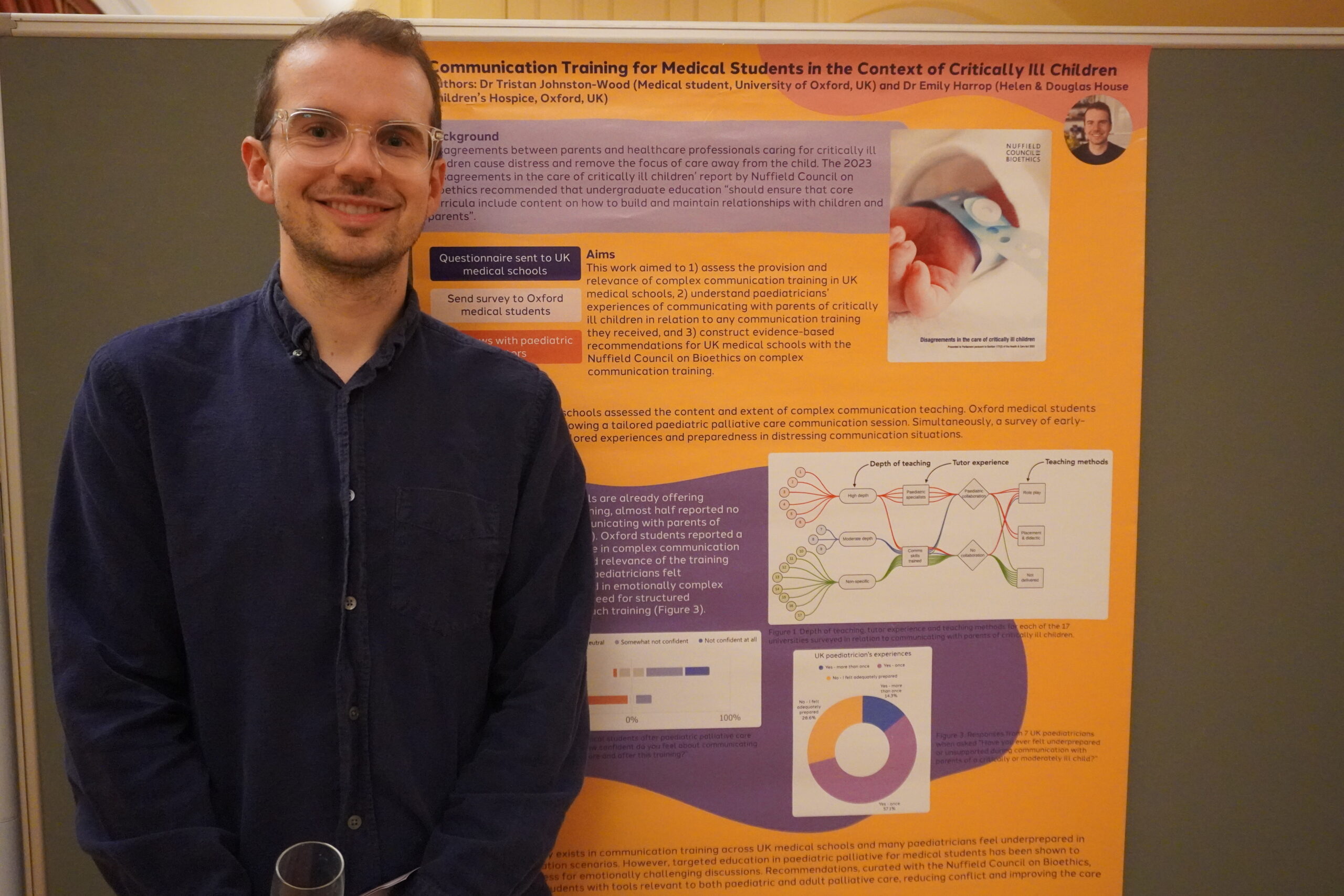
The symposium also highlighted the growing reach of research connected to Helen & Douglas House. From studies into children's pain management and breakthrough pain, to international collaborations supporting children's palliative care development around the world, the breadth of work on display was remarkable.
Highlights included pioneering work led by Professor Christina Liossi to develop the first breakthrough pain assessment tool specifically for children and young people, helping improve communication, consistency and care.
Guests also heard from Julia Downing of the International Children's Palliative Care Network, who shared how research collaborations in countries such as Ghana have strengthened services, influenced training programs and reached thousands of healthcare professionals worldwide.
These examples demonstrated how research can influence practice, education and policy at every level, creating benefits for children and families far beyond any one organisation.
An evening that inspired
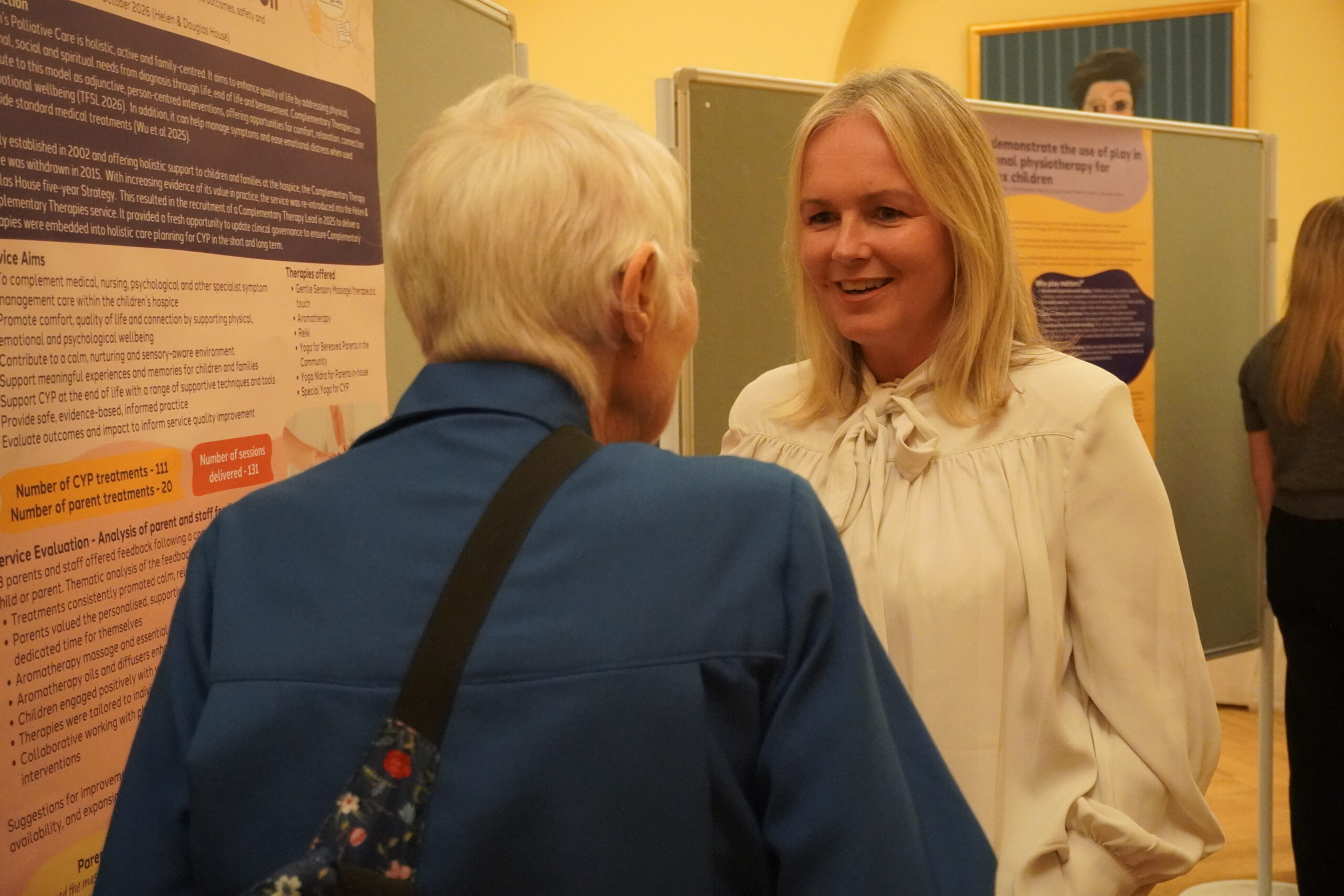
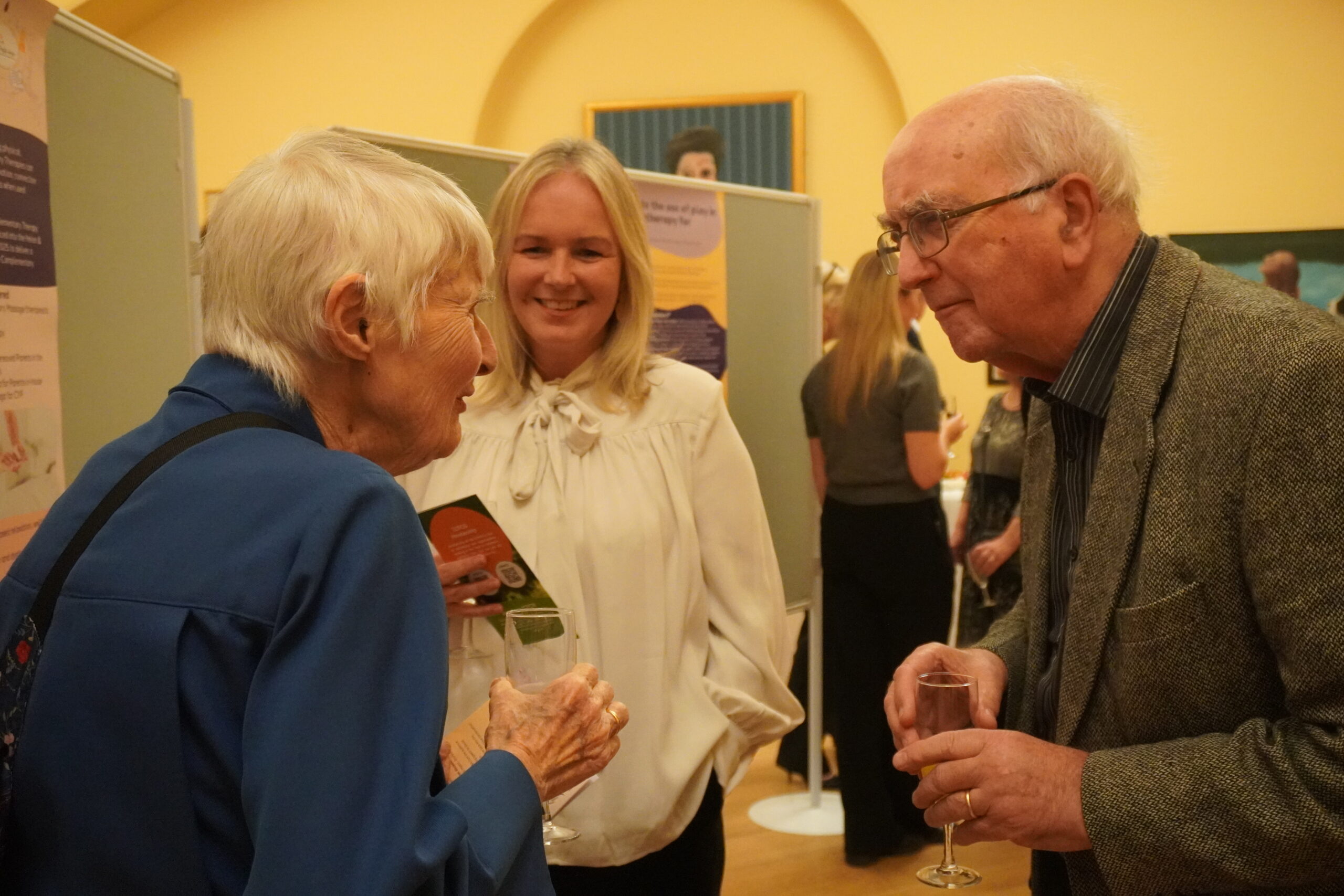
The event received overwhelmingly positive feedback from attendees, reflecting both the quality of the symposium and the significance of the work being shared.
"What a great showcase of what is being achieved to inform, support and develop children's palliative care more widely, beyond direct clinical day to day care."
"An excellent and inspiring evening."
"Great to underline how HDH continues to 'punch above its weight' on the regional, national and international level, and how investment in collaborative engagement brings significant benefits to the quality of care for children and families that HDH offers."
"Thank you and congratulations on organising another excellent event, which was informative, engaging, and, as always, very professionally run."
Laura McHale from Together for Short Lives was also in the audience and she summed up the evening perfectly:
"I wanted to say a huge thanks to you and the team for inviting Together for Short Lives to Ripples of Research last week. It was an unforgettable evening and highlighted so thoughtfully the power of research, but collaboration. I'll be thinking 'big r', 'small r' forevermore."
Looking ahead
The lasting message from Ripples of Research was one of hope and collaboration. Whether it starts with a parent's experience, a clinician's curiosity or a researcher's question, every contribution has the potential to create change.
At Helen & Douglas House, we remain committed to building a culture where research is embedded throughout our organisation and where the voices of children, young people and families continue to shape the future of care.
Thanks to the generosity of our supporters, these ripples continue to spread, influencing practice, strengthening evidence and improving the lives of families across the UK and beyond.
Together, we're helping ensure that today's questions become tomorrow's breakthroughs.